Krimski most dug 19 kilometara povezuje ruski Krasnodarski kraj s ruskim okupiranim Krimskim poluotokom, preko Kerčkog tjesnaca. Izgrađen je nakon ruske okupacije Krima 2014. godine
News
Komentari 1
Krimski most dug 19 kilometara povezuje ruski Krasnodarski kraj s ruskim okupiranim Krimskim poluotokom, preko Kerčkog tjesnaca. Izgrađen je nakon ruske okupacije Krima 2014. godine
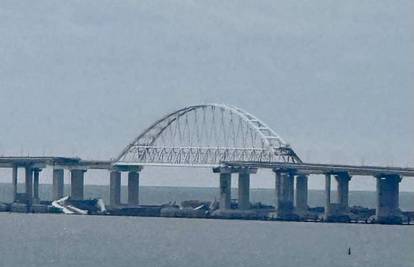
Dio Krimskog mosta, koji povezuje ruski okupirani Krim s Rusijom, urušio se nakon što je tijekom noći 17. studenoga izveden ukrajinski raketni napad projektilom Flamingo.
Fotografije objavljene na društvenim mrežama prikazuju kako su jedan od lukova konstrukcije i dio kolnika između dvaju potpornih stupova potpuno nestali, dok su ispod mosta vidljivi ostaci urušene konstrukcije.
The video and photo without watermarks, in case anyone needs them. https://t.co/pLt4nPOxhQ
— Anton Gerashchenko (@Gerashchenko_en) November 17, 2026
„Krimski most. Sankcioniran”, napisao je Vladislav Vlasiuk, ukrajinski predsjednički povjerenik za sankcije, u objavi na društvenoj mreži X.
Krimski most dug 19 kilometara povezuje ruski Krasnodarski kraj s ruskim okupiranim Krimskim poluotokom, preko Kerčkog tjesnaca. Izgrađen je nakon ruske okupacije Krima 2014. godine. Cestovni dio mosta otvoren je 2018., a putnički željeznički promet uspostavljen je 2019. godine.
The strike and resulting destruction of the Kerch Bridge is a turning point. It carries both symbolic and practical significance. The Kerch Bridge is the main symbol of the Russian occupation of Ukrainian Crimea and the embodiment of illegal annexation for Ukraine. It represents much more than just a transportation artery. For Russia and Putin, it is a symbol of "greatness" and control over Crimea. It is Putin's flagship project. The construction of the bridge was framed by Russian propaganda as the "construction of the century" and a personal achievement of Putin, who personally opened it in 2018 driving a KAMAZ truck. For the Kremlin, the bridge became material proof that Crimea is "forever" connected to the territory of the Russian Federation and fully integrated into Russia. For years, Russian authorities called the crossing "the most protected object in the world." Thus, each successful strike on the bridge further shatters the myth of the invincibility of Russian air defense and Ukraine's inability to reach key targets in Russia's deep rear. For us, Ukrainians, the Kerch Bridge is a symbol of occupation and the inevitability of de-occupation. The bridge is a symbol of the violation of international law and sovereignty. The crossing was used primarily for the transfer of Russian troops, equipment, and weapons, turning Crimea into a massive military base and a springboard for an offensive on the south of Ukraine. A successful strike on the bridge is a turning point. It is a demonstration that Ukraine can and will defeat the enemy. It is a demonstration that the Kremlin's positions are vulnerable even in those regions that Moscow considered its untouchable rear. Crimea has de facto found itself in a blockade. There are no ferries or railways, and the only navigable channel is blocked. The occupied peninsula is becoming critically dependent on the "Novorossiya" highway through the Russian-occupied territories of the Zaporizhzhia and Kherson regions, which Russians have been calling the "road of death" for some time now. Ukraine's Defense Forces have established dense remote fire control over the highway, turning the 700-kilometer overland corridor into a vulnerable zone. A strike on the Kerch Bridge will directly affect the Russian "Dniepr" troop grouping and the logistics connectivity factor. The "Dniepr" grouping operates in the Kherson and Zaporizhzhia directions and received a significant portion of its ammunition, fuel, and heavy equipment through Crimean hubs. The loss of full-fledged railway and road communication across the Kerch Strait will force Russians to stretch their supply lines from the Rostov region, making convoys even more vulnerable to strike weapons. Of course, the Russian propaganda machine will employ information isolation of the region and will shift its audience's focus to other topics to avoid panic and criticism of the central authorities. A similar scenario was observed during the Ukrainian operation in Russia's Kursk region. For Ukraine, this creates a window of opportunity for targeted information work via local Telegram channels and word of mouth, highlighting the inability of Moscow and Putin to guarantee security and basic provisions to the residents of the peninsula.
— Anton Gerashchenko (@Gerashchenko_en) November 17, 2026
Most je meta ukrajinskih napada od samog početka ruske invazije punog opsega.
Videozapis koji su objavili istraživači otvorenih obavještajnih izvora (OSINT) navodno prikazuje snimku s kamere postavljene na ukrajinski krstareći projektil Flamingo dok se približava mostu.
Denis Shtilierman, suvlasnik i glavni inženjer tvrtke Fire Point, koja proizvodi taj projektil, u kasnijoj je objavi na društvenoj mreži X, čini se, potvrdio njegovu uporabu u napadu.
Igre na sreću mogu izazvati ovisnost. 18+